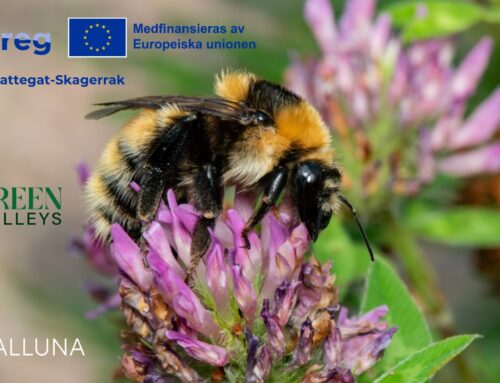
New films have been produced as part of the EU project Green Valleys 2.0, which is aimed primarily at secondary school students. The aim is to increase understanding of the importance of agriculture for food production and biodiversity, and to show how agricultural waste streams can be used to produce biochar, which contributes to climate benefits and long-term carbon storage in the soil.
The educational films can also be used by other target groups who want to learn more about the role of agriculture in the green transition.
Biodiversity and food production
Biodiversity is essential for sustainable agriculture and reliable food production. Pollinators, healthy soils, and natural pest predators all help improve crop yields while reducing the need for chemical pesticides. By farming in harmony with nature, humans and ecosystems can thrive together. Agriculture that protects and promotes biodiversity is more resilient to climate change and benefits both the environment and our food supply.
Biodiversity and agriculture
Biodiversity is the foundation of all life on Earth, yet it is increasingly threatened by the way we use our natural resources. Responsible land use is essential to preserve the variety of habitats that animals, plants, and insects need to survive. Changes are happening rapidly—both globally and here in Sweden—and many species are at risk of disappearing forever. Since our food production relies on pollinating insects, their decline is not only a problem for nature but also for humanity.
Biodiversity in Green Valleys
The film shows how researchers in Denmark and Sweden are testing different mixtures of grass, herbs and clover seeds. The goal? To get a good harvest while also benefiting the climate and pollinating insects. By mixing many plant species, it is possible to store more carbon in the soil, use nitrogen more wisely and attract more bumblebees and hoverflies – without compromising the harvest. In Sweden, tests are also being conducted to see how the number of harvests affects insect life, and it turns out that a little unharvested land can make a big difference. In short: diversity in the field is good for the soil, the climate and the bees!
Biochar – Uses and Climate Benefits
Cecilia Hermansson, project manager at Hushållningssällskapet Sjuhärad, talks about biochar and its potential for both climate and agriculture. Biochar is produced through pyrolysis of organic materials such as wood chips or grass, creating a stable form of carbon that can be stored in the soil instead of being released back into the atmosphere. When added to the soil, biochar acts like a battery for water and nutrients, strengthening plants and crops, especially in dry and nutrient-poor soils. Cecilia believes that biochar is a valuable tool for the sustainable agriculture of the future, both for the climate and for coping with extreme weather like droughts.
The video is produced by Västra Götalandsregion,2025.
The project is funded by the EU Interreg Öresund-Kattegat-Skagerrak and the Västra Götaland Region.