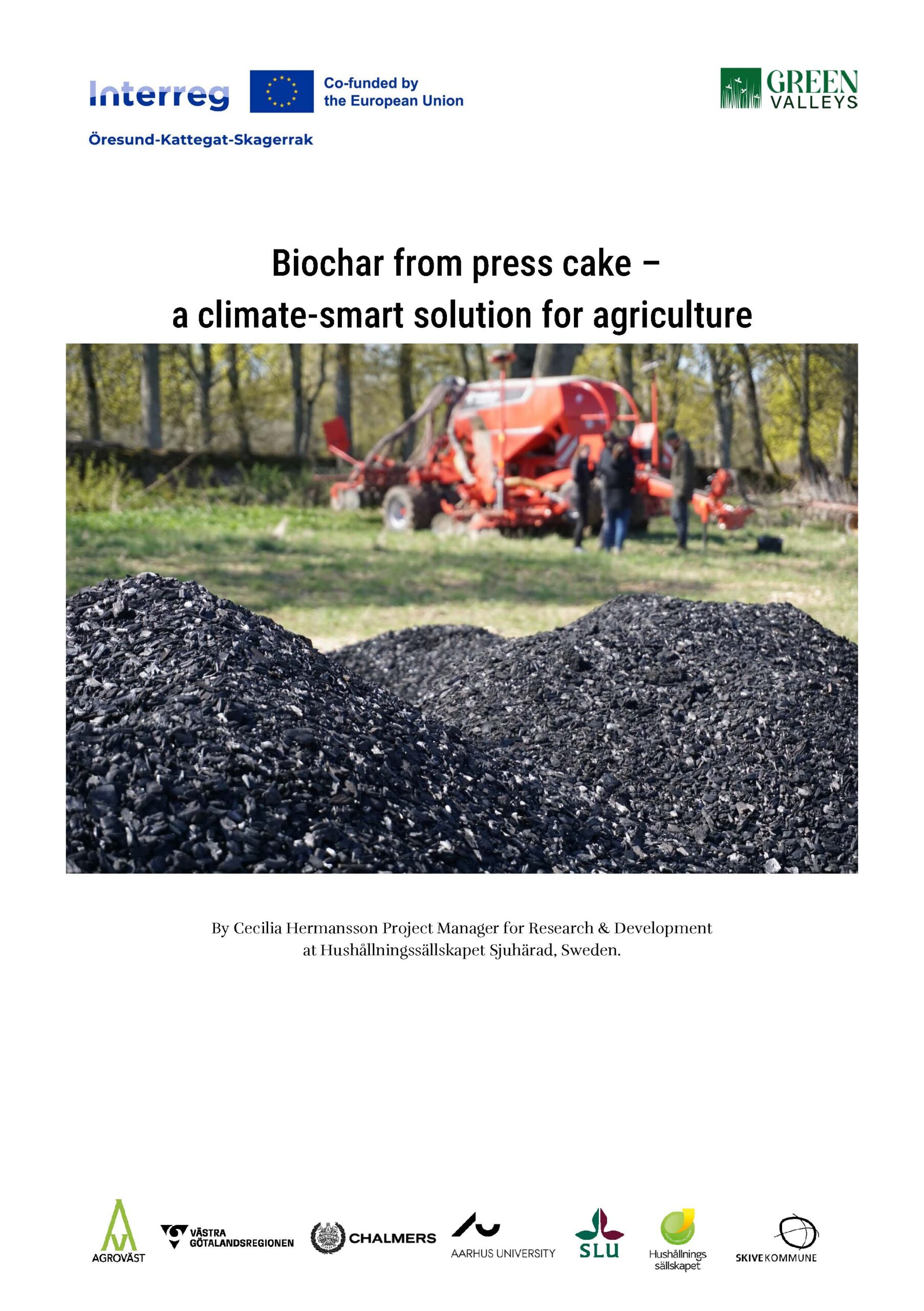
Cecilia Hermansson, project manager at Hushållningssällskapet Sjuhärad, talks about biochar and its potential for both climate and agriculture. Biochar is produced through pyrolysis of organic materials such as wood chips or grass, creating a stable form of carbon that can be stored in the soil instead of being released back into the atmosphere. When added to the soil, biochar acts like a battery for water and nutrients, strengthening plants and crops, especially in dry and nutrient-poor soils. Cecilia believes that biochar is a valuable tool for the sustainable agriculture of the future, both for the climate and for coping with extreme weather like droughts.
Produced by Västra Götalandsregion, 2025
More material about Biochar
Research shows that biochar can store carbon in the soil for thousands of years, making it one of the most stable forms of carbon dioxide storage. By documenting how much biochar is produced and used in the soil, farmers and companies can register and certify this as a carbon sink and have the opportunity to sell carbon credits.
Read about biochar in out project Green Valleys: